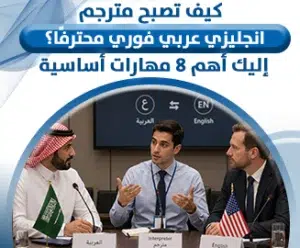


Overview of the Translator’s Work in the Translation Profession
How to Become a Professional Translator? Here are 7 Detailed Steps
- Linguistic Skills
- Computer Skills
- Professional Translator Work Skills
- Gaining More Professional Experience
- Learning How to Market Yourself and Your Skills
- Continuing Learning and Ongoing Training to Become a Professional Translator
- Improving Knowledge and Cultural Background in the Field of Specialization
Tools and Techniques to Help You Master Translation
Tips for Achieving Success as a Professional Translator
Qualities a Professional Translator Must Possess
The Importance of Specialization in a Specific Field as a Specialized Translator
How to Build a Strong Portfolio as a Freelance Professional Translator?
Challenges Facing a Professional Translator and How to Overcome Them
How to Benefit from Specialized Translation Courses to Become a Professional Translator?
Do I Need a Sworn Translation or Is Legal Translation Sufficient? Is There a Difference Between Them?
These are common questions we frequently receive at Injaz, the leading legal translation company in the Gulf. Here, we provide a clear explanation of the subtle differences between these two types of translation, shedding light on lesser-known aspects of this vital field for our clients.
In today’s era, the demand for translation services is growing, whether for individuals or businesses, across a wide range of documents. However, many face challenges in determining the appropriate type of translation for their needs.
This is entirely understandable; it’s difficult to make the right decision without being aware of the nuanced differences between legal translation and sworn translation.
If you’re looking for a clear answer, you’ve come to the right place. In this post, we will clearly outline the difference between legal translation and sworn translation, and how to choose the type that best suits your needs.
Although these two types may seem similar, there are key differences you need to understand to ensure you use the appropriate service.
Legal Translation: What Is It and When Do You Need It?
Legal translation is a fundamental component of international and cross-border transactions, where official documents, lawsuits, and legislation require precise translation from one language to another without losing their legal meaning.
Legal translation differs from regular translation in that it demands a deep understanding of legal systems and diverse cultures to prevent any misinterpretation that could lead to legal issues.
Legal translation is used in various fields, such as commercial contracts, international agreements, government documents, and official certificates. These documents may sometimes require a professional legal translator to ensure accuracy and compliance with local and international laws.
Moreover, in some cases, legal translation alone is insufficient, and the translation must be sworn and certified by the relevant authorities to ensure its acceptance in courts or legal institutions.
Working in the field of legal translation requires a high level of professionalism and attention to detail to ensure that the translated texts align perfectly with the original documents. Individuals and companies rely on this service to facilitate legal processes between different parties and ensure smooth and accurate proceedings.
What Is Sworn Translation?
Sworn translation is a type of legal translation performed by a legally certified translator authorized by official entities. This type of translation is typically required for documents that need attestation or legal use in courts or government institutions.
A sworn translator is distinguished by being officially accredited and is responsible for providing accurate legal translations that match the original content.
Sworn translation is used in various situations, such as submitting legal documents to courts (e.g., contracts, legal certificates) or providing official documents for immigration and citizenship purposes. In such cases, regular translation is not sufficient; a certified translation by a professional legal translator is necessary to ensure the documents are accepted in official procedures.
When companies or individuals need to submit certified documents in foreign countries, these cases often require certified legal translation to ensure legal recognition of the content in the target country. Whether it involves registering a company, filing lawsuits, or immigration transactions, sworn translation provides the necessary level of accuracy and credibility to ensure the integrity of legal procedures.
In short:
This type is essential for translating official documents and is referred to as **sworn legal translation** because the translator also acts as a notary, using their signature (like an oath) to certify the translated documents. In this case, a printed copy of the original document must be sent to the sworn translator. Upon receiving the document, the translator translates it, signs, and stamps it. Finally, the sworn translation is mailed to the client along with the original document.
Meaning of a Sworn Translator
A sworn translator is a translator officially certified by judicial or governmental authorities and granted special authorization to provide sworn translations. This enables them to produce legally binding translations suitable for use in official procedures, such as courts and government bodies.
Sworn translation is characterized by its accuracy and reliability and is used for various legal documents, such as contracts, court rulings, and birth or marriage certificates. Sworn translators rely on their extensive expertise in legal translation to ensure that specialized legal terminology is translated accurately and reliably.
Obtaining the title of “sworn translator” requires passing rigorous tests and meeting strict conditions set by the relevant authorities, making their translations fully legally valid. Since sworn translations are used in official transactions, they carry the same level of trust as the original documents. Courts, embassies, and government institutions typically require sworn translations for legal and official attestation purposes.
Key Differences Between Legal Translation and Sworn Translation
There are fundamental differences between legal translation and sworn translation, and understanding these distinctions is crucial to selecting the appropriate service for your needs. Legal translation involves accurately transferring legal texts from one language to another and is used for contracts, regulations, legal documents, and other texts requiring precise understanding of legal terminology.
A professional legal translator specializes in this type of work, possessing the expertise and knowledge needed to effectively translate legal texts.
Sworn translation, on the other hand, is a certified translation performed by a translator accredited by an official entity and is often required when submitting documents to courts or government bodies.
The primary difference is that **sworn translation** is not just about transferring texts; it is considered a legal document in itself, with the sworn translator guaranteeing the accuracy of the translation before the law.
In some cases, legal translation alone is sufficient if the documents are used for internal or unofficial purposes. However, if you need to submit documents to government bodies or courts, you will need a sworn translator to certify the legal translation to ensure the documents are accepted.
In summary, if you need to translate legal documents for internal or private use, legal translation may be sufficient. However, for cases requiring legal recognition or official attestation, sworn translation is the better option to ensure the credibility and acceptance of the documents.
When to Choose Legal Translation?
In many cases, individuals and companies are required to use legal translation when they have legal documents that need accurate transfer from one language to another. Legal translation is typically sufficient in cases where the documents do not need to be submitted to official entities or courts.
For example, legal translation can be used for commercial contracts, agreements between companies, and documents related to regulations and laws that do not require official attestation.
When dealing with documents related to daily legal transactions, a professional legal translator is the appropriate choice. They possess the necessary skills to understand legal terminology and provide accurate translations. It is critical in these cases that the translation is correct to avoid any ambiguity or misinterpretation that could affect legal terms.
However, if the documents are intended for courts or other official entities, you may need to use a certified sworn legal translation by a sworn translator. This ensures official recognition of the translated documents and their legal use.
Therefore, if you do not need official legal recognition, legal translation can be a reliable and suitable option.
In short:
Legal translation is a specialized branch of translation. A legal translator is someone with extensive knowledge and experience in translating legal, administrative, and judicial texts. This means they are qualified to translate these texts accurately, as they possess a broad range of technical vocabulary related to this field. However, a legal translator is not necessarily certified to perform sworn translations. Legal translators are simply experts in their field, just as a translator may specialize in technical, scientific, financial, or marketing texts.
5 Components Required to Ensure High-Quality Legal Translation
Translating legal documents and papers is a complex and specialized field that requires skills and knowledge in both language and law. Legal translation is intricate and particularly important to entrust to experts. A single error in translating a legal document could lead to serious consequences.
1. **Strong Understanding of Legal Language**: Legal language has a unique style that involves a high degree of precision and skill. It is not limited to specialized terminology but also includes specific phrases and expressions unique to the field. Translators must be familiar with these conventions to ensure clear and accurate delivery.
2. **Knowledge of Different Document Types**: Translators must understand the conventions applicable to various document types, such as contracts, shareholder agreements, rulings, etc.
3. **Understanding of Legal Systems**: Legal translation requires a strong understanding of legal systems. Translators must be aware of the distinct aspects of different areas of law (criminal, commercial, family, international, etc.). Many agreements and contracts require translators to know the legal systems and practices of the countries involved and adapt their translations accordingly.
4. **Adaptation to Target Language Conventions**: Good legal translation is adapted to the conventions of the target language. Legal language conventions vary from one language to another, requiring a degree of adaptation in the target language text. The text must be idiomatic, written in natural, standard language. In other words, legal translation should not be literal (word-for-word) but should faithfully convey the meaning of the original text in a way that feels natural. Above all, legal texts must be translated clearly to ensure they are free of ambiguity.
5. **Effective Communication Between Client and Translator**: It is crucial for clients to explain the context of their requests to the translation agency. The translator needs to know why the document needs to be translated and who will read it. Generally, the approach for texts aimed at the public differs from those intended for specialized lawyers in the field.
In some contexts, legal translation also requires certification, known as a “certified translation.”
When Do You Need Sworn Translation?
In some cases, legal translation alone is not sufficient, and resorting to sworn translation becomes necessary. Sworn translation is officially certified by a translator accredited by judicial or governmental authorities, making it reliable for use in courts or other official entities. For example, you need sworn translation when submitting documents to courts or legal bodies, such as marriage contracts, wills, or court rulings.
In other situations, companies may need certified legal translation if the documents are part of international deals or official transactions requiring approval from legal authorities in a specific country. These cases may include international contracts or official certificates. In such cases, relying on a professional legal translator is the ideal choice to ensure the translation is accurate and certified.
In short, you need sworn translation when official entities, such as courts or embassies, require translated documents with official status and legal certification. This translation provides additional credibility to the translated documents, ensuring their acceptance in legal procedures, making it the best option for cases requiring official attestation.
Conclusion
In summary, the key differences between legal translation and sworn translation lie in the level of formality and credibility required. Legal translation aims to accurately convey meanings in legal contexts and is used for documents like contracts and agreements. Sworn translation, on the other hand, is officially certified and used in courts and government bodies where documents require legal attestation.
Final advice: If you need to submit official documents to a government or judicial entity, sworn translation is the best choice. For commercial transactions or international contracts, legal translation may be sufficient. Your choice depends on the legal requirements of the document and the situation you are facing.
Frequently Asked Questions
1. **What is the difference between legal translation and sworn translation?**
Legal translation focuses on accurately conveying the content of legal documents, while sworn translation is officially certified for use in courts and government entities.
2. **When do I need sworn translation?**
When submitting documents to a court or government entity that requires official attestation.
3. **Is legal translation sufficient for commercial contracts?**
Yes, legal translation is often sufficient for commercial contracts and international agreements.
4. **Does sworn translation have to be done by a certified translator?**
Yes, a sworn translator must be certified by an official entity for the translation to be recognized.
5. **How do I choose the right type of translation?**
It depends on the nature of the document and the legal requirements of the entity you are dealing with.
6. **Does Injaz provide sworn translation for official documents?**
Yes, we provide sworn legal translation services for documents requiring official attestation by courts or government entities.